
Canadian Gardener with a passion for creating!
Seed Bomb FAQ
Seed Bomb FAQ
What species are in your seed bombs?
All our wildflower seed bomb products use the same wildflower mix, regardless of pack size or packaging. Sunflower seed bombs contain sunflower seeds instead. The planting instructions, including optional pre-soaking, apply to every seed bomb product.
Wildflower Seed Bombs
The shared wildflower mix may include the following species. The actual seeds in each bomb vary:
- Shasta Daisy – Chrysanthemum maximum
- Cornflower (Bachelor's Button) – Centaurea cyanus
- Golden Tickseed (Calliopsis) – Coreopsis tinctoria
- Cosmos – Cosmos bipinnatus
- Forget-me-nots – Cynoglossum amabile
- Delphinium / Larkspur – Delphinium consolida
- Sweet William – Dianthus barbatus
- Foxglove – Digitalis purpurea
- Purple Coneflower – Echinacea purpurea
- California Poppy – Eschscholzia californica
- Baby's Breath – Gypsophila elegans
- Scarlet Flax – Linum grandiflorum rubrum
- Blue Flax – Linum perenne
- Wild Lupine – Lupinus perennis
- Mallow – Malope trifida
- Calendula – Calendula officinalis
- Flanders Poppy – Papaver rhoeas
- Black-eyed Susan – Rudbeckia hirta
- Siberian Wallflower – Cheiranthus allionii / Erysimum allionii
- Pheasant's Eye – Adonis aestivalis
- Elegant Clarkia – Clarkia unguiculata
- Dwarf Morning Glory – Convolvulus tricolor
- Bird's-eye (Gilia) – Gilia tricolor
- Candytuft – Iberis umbellata
- Rose Mallow / Lavatera – Lavatera trimestris
- Evening Stock – Matthiola longipetala
- Marvel of Peru – Mirabilis jalapa
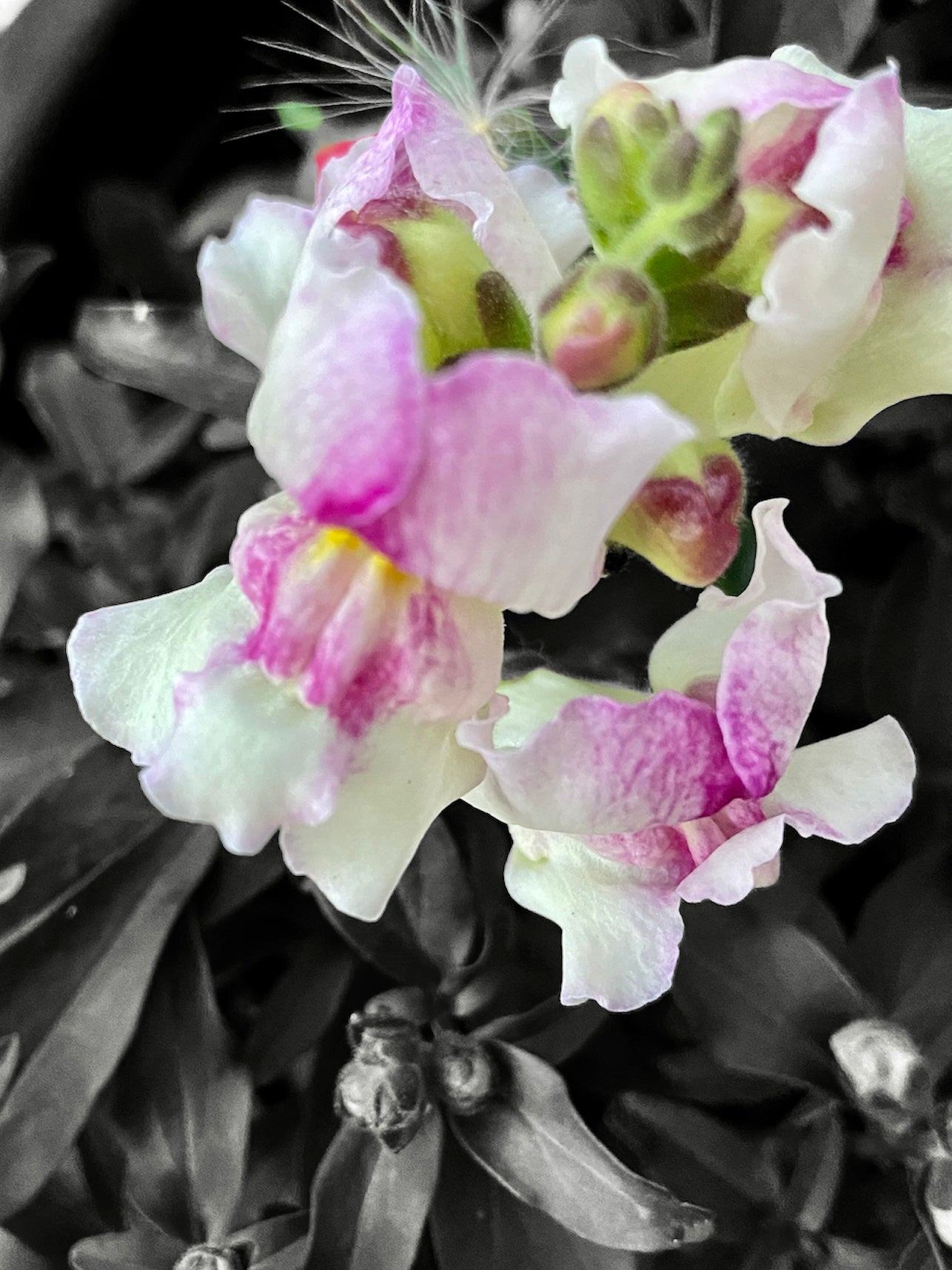
- Snapdragon – Antirrhinum majus
- Phlox – Phlox drummondii
- Garden Catchfly – Silene armeria
- Pinks / Dianthus – Dianthus chinensis
Sunflower Seed Bomb
- Sunflower – Helianthus annuus
Note: Because each bomb is handcrafted, the exact seeds per bomb may vary. All mixes are described as "may include" — not every bomb will contain every species listed.
Are these plants native to Canada?
Our mixes are sourced from Canadian suppliers with Canadian growing conditions in mind, but most species in the wildflower blends are non-native ornamentals that are well-adapted to Canadian gardens and widely grown here. They are not considered invasive in Canada and are commonly sold in Canadian nurseries.
A few species have partial native ranges that extend into Canada:
- Purple Coneflower (Echinacea purpurea) – native to central and eastern North America; not native to the Prairies or BC.
- Black-eyed Susan (Rudbeckia hirta) – native across much of Canada including the Prairies.
- Wild Lupine (Lupinus perennis) – native to eastern North America; not native to western Canada.
- Blue Flax (Linum perenne) – native populations exist on the Prairies.
If you specifically want to plant native-only species, we recommend checking with local native plant societies for regionally appropriate alternatives.
Which hardiness zones are these suited for?
The wildflower mixes contain a blend of annuals, biennials, and perennials suited for Zones 3–8, covering most populated regions of Canada. Key guidance by region:
- BC (Zones 5–8, coastal and interior): Most species will thrive. Plant after last frost (March–May depending on location).
- Alberta / Saskatchewan / Manitoba (Zones 3–5): Plant from mid-May onward after frost risk passes. Annuals like Cosmos, California Poppy, and Cornflower are reliable performers.
- Ontario / Quebec (Zones 5–7): Plant May–June. Perennials like Echinacea and Rudbeckia establish well and return year after year.
- Atlantic Canada (Zones 5–6): Plant after last frost (May–June). The mix performs reliably in this zone range.
- Sunflower Seed Bomb: Best in Zones 3–9. Direct sow after last frost; sunflowers prefer warm soil.
Where should I plant my seed bombs?
- Sunlight: Choose a spot that receives at least 6 hours of direct sun per day. Most species in our mixes are sun-lovers.
- Soil: Well-drained soil is best. Avoid low spots where water pools. Heavy clay can be improved by mixing in compost or loosening the top 5–10 cm before planting.
- Space: Seed bombs can be scattered in flower beds, borders, or bare patches of lawn. For a concentrated patch, space bombs 15–30 cm apart.
How do I prepare the soil?
- Loosen the top 5–10 cm of soil with a hand fork or garden tool.
- Remove any large weeds or debris.
- If soil is compacted or clay-heavy, mix in a small amount of compost.
- Place or gently press the seed bomb onto the surface and cover lightly with a thin layer of soil (no more than 1 cm deep).
- Water gently to avoid washing away the seeds.
Optional pre-soak: You can soak any of our seed bombs, including wildflower and sunflower seed bombs, in water for 10–15 minutes before placing it on soil. Pre-soaking is optional for all products.
How much water do the seed bombs need?
Keep the soil consistently moist (not waterlogged) until germination is established — typically the first 2–4 weeks. After that, most species are moderately drought-tolerant once established, but will bloom more vigorously with regular watering during dry spells. Aim for deep watering 2–3 times per week rather than light daily watering.
How long does germination take?
Germination timing varies significantly by species and conditions:
- Fast germinators (7–14 days): Cosmos, Cornflower, Calendula, California Poppy, Scarlet Flax, Baby's Breath
- Medium germinators (14–21 days): Black-eyed Susan, Sweet William, Shasta Daisy, Snapdragon, Phlox
- Slower germinators (21–40+ days): Echinacea (Purple Coneflower), Lupine, Delphinium, Foxglove
- Sunflower: 7–14 days in warm soil (above 15°C)
Important: Don't give up if you don't see sprouts in the first two weeks. Temperature, light, soil quality, and moisture all affect germination. Some perennials may not bloom until their second season.
How many seed bombs should I use?
As a general guide:
- Small patch (0.5–1 m²): 1–3 bombs
- Medium bed (1–3 m²): 3–6 bombs
- Large area or border planting: Use multiple packs; our individually wrapped bombs are available in quantities of 1, 10, 25, or 50.
More bombs = denser planting. For a naturalized wildflower look, scatter them loosely and let them fill in over a season or two.
Can I plant seed bombs in pots or containers?
Yes — with some planning. Use a large container (at least 30 cm diameter and 25 cm deep) with drainage holes. Fill with quality potting mix. Our Sunflower Seed Bomb is specifically noted as suitable for large pots. For the wildflower mixes, choose a container large enough to support multiple species; compact varieties like Cosmos, Calendula, Cornflower, and Phlox do best in containers. Tall species like Lupine, Delphinium, and Sunflower need deeper pots or garden beds.
How should I store seed bombs?
- Keep in a cool, dry place away from moisture and direct sunlight.
- Do not store in the refrigerator — condensation can trigger premature germination.
- For best germination rates, plant within 12 months of purchase.
- If storing individually wrapped bombs, keep them in their packaging until ready to use.
What should I expect in the first season?
Here's a realistic picture of what a typical first season looks like in most Canadian climates:
- Weeks 1–2: Moist, undisturbed soil. Watch for early sprouts from fast germinators like Cosmos and Cornflower.
- Weeks 3–6: Seedlings establish. You may see a variety of leaf shapes — this is normal; different species emerge at different rates.
- Month 2–3: Annuals like Cosmos, California Poppy, Calendula, and Cornflower should begin blooming.
- Later in the season: Perennials (Echinacea, Lupine, Black-eyed Susan) may focus on root development in Year 1 and bloom more fully in Year 2.
- Biennials (Foxglove, Sweet William) typically bloom in their second year.
Don't expect every species to bloom in Year 1 — a mixed seed bomb is a multi-season garden investment. Annual species will give you colour right away; perennials reward patience.
Still have questions?
We're happy to help! Contact us here or message us directly — we're based in Edmonton, Alberta, and offer local pickup for customers in the area.
SUBSCRIBE TO OUR EMAILS
Be the first to know about new collections and exclusive offers.